
Guide · KC Garage Door Repair
Why Is My Garage Door So Loud?
A noisy garage door is almost always trying to tell you something — and the noise usually tells the technician exactly what is wrong before they put hands on the door. Here is the honest list of what makes a door loud, in order of how common it is.
A garage door has a lot of moving parts and almost all of them are noisy when they are dry, worn, loose, or misaligned. The good news is the noise pattern almost always points to the cause: a grinding sound is different from a banging sound is different from a screech. The bad news is people often live with the noise until the part that was warning them about itself finally fails — usually on a Monday morning right before they need to leave for work.
Below is the honest order in which we look at a noisy door. The fixes are listed by how realistic they are for a careful homeowner versus what to leave to a technician.
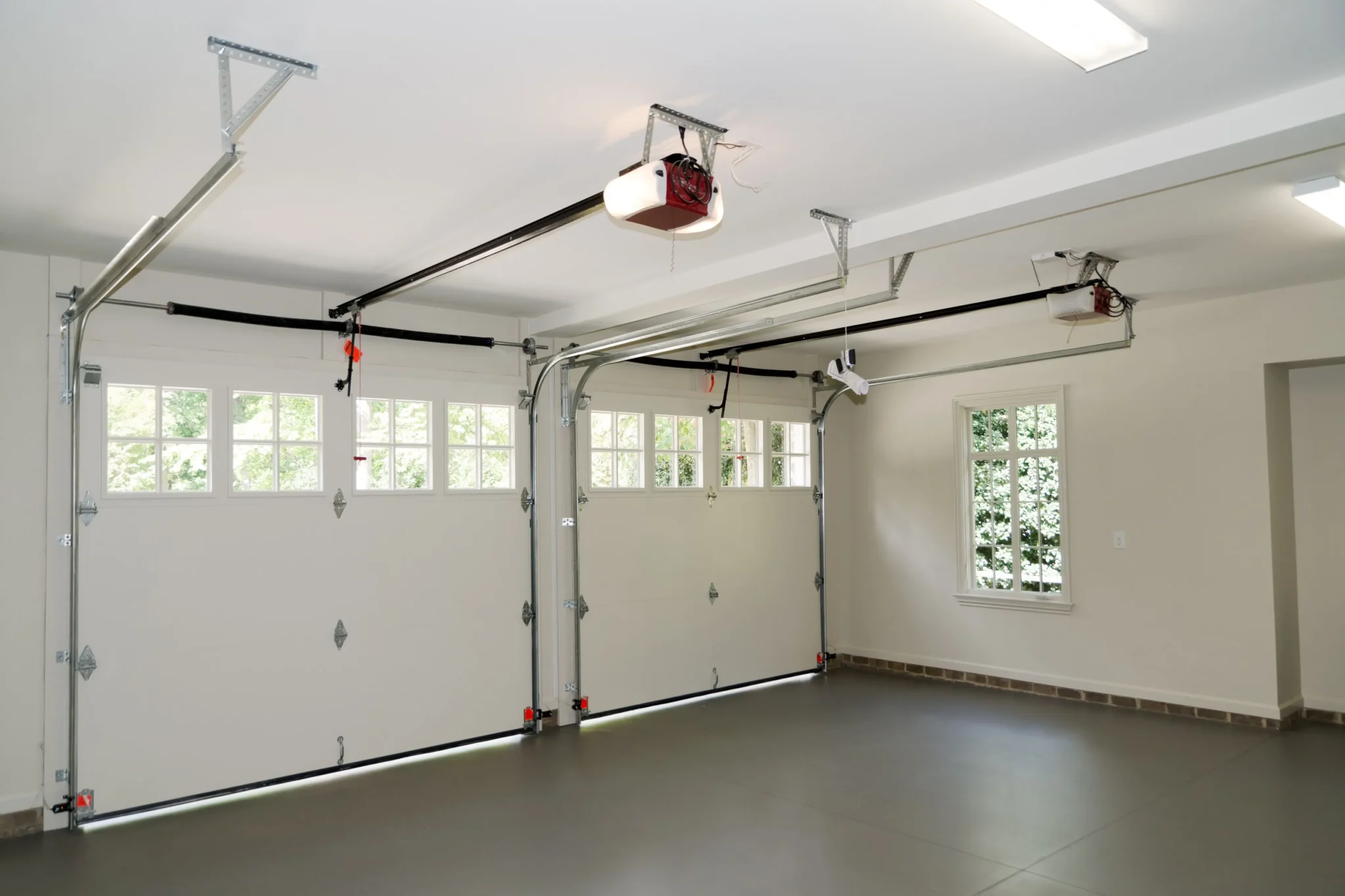
1. Worn or Cheap Rollers (Most Common Cause)
The little wheels that run inside the vertical tracks are doing thousands of cycles a year. Inexpensive steel rollers ride directly on metal and they get loud quickly — a low rumble that starts in the corners and builds. Nylon rollers (especially the sealed-bearing kind) are dramatically quieter and they last much longer. Swapping all ten rollers on a typical two-car door is one of the highest-payoff upgrades you can make for noise.
- Symptom: low rumble or chatter that grows over time
- Homeowner fix: a drop of garage-door lube on each roller bearing (NOT on the track itself)
- Real fix: replace with sealed-bearing nylon rollers — much quieter, much longer life
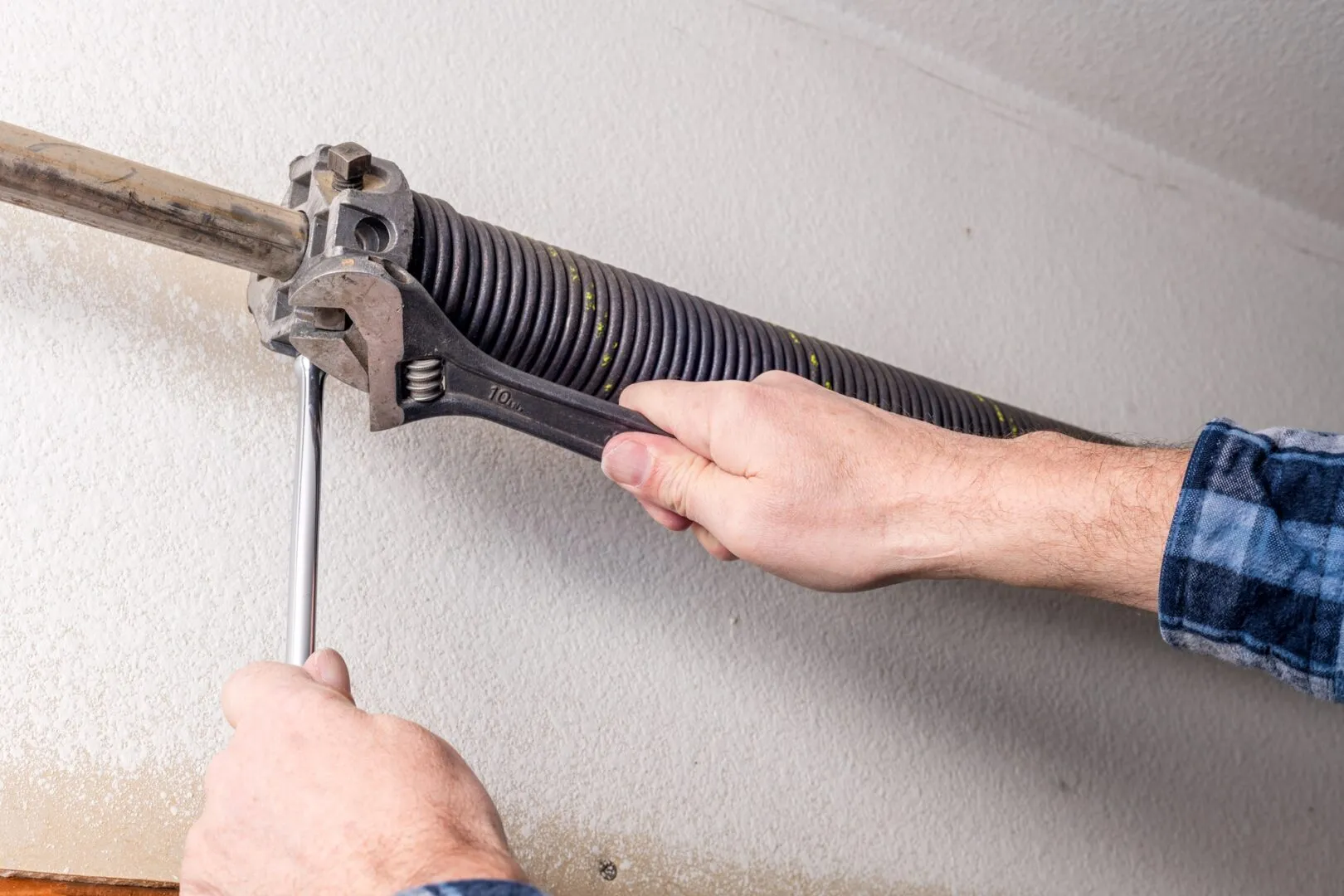
2. Dry Hinges and Bearings
Every hinge between the door sections and every spring or shaft bearing wants a small amount of lubrication once or twice a year. Dry metal-on-metal joints sing like a violin. Use a garage-door-specific spray lubricant (white lithium or silicone), not WD-40 — WD-40 is a solvent that drives lube out of the joint. And do not lube the tracks themselves; tracks are supposed to be dry.
- Symptom: high-pitched squeak or screech as the door moves
- Homeowner fix: garage-door-specific lube on hinges + roller bearings + spring coils — about 5 minutes
- Do NOT: spray WD-40, do NOT lube the tracks, do NOT use grease (it collects grit)

3. Loose Nuts, Bolts, and Brackets
A door cycling a few times a day will work its hardware loose over time. Loose hinges rattle, loose track brackets clang as the door changes direction, and a loose bottom-bracket bolt is actually a safety issue (the bottom bracket is under spring load and is one of the higher-risk parts to mess with). A careful homeowner can snug up visible hinge bolts; bottom brackets are a tech's job.
- Symptom: rattling, clanging, hardware that sounds 'looser' than it did
- Homeowner fix: snug visible hinge bolts gently with a socket — do not over-torque
- Tech's job: bottom brackets, spring brackets, track brackets
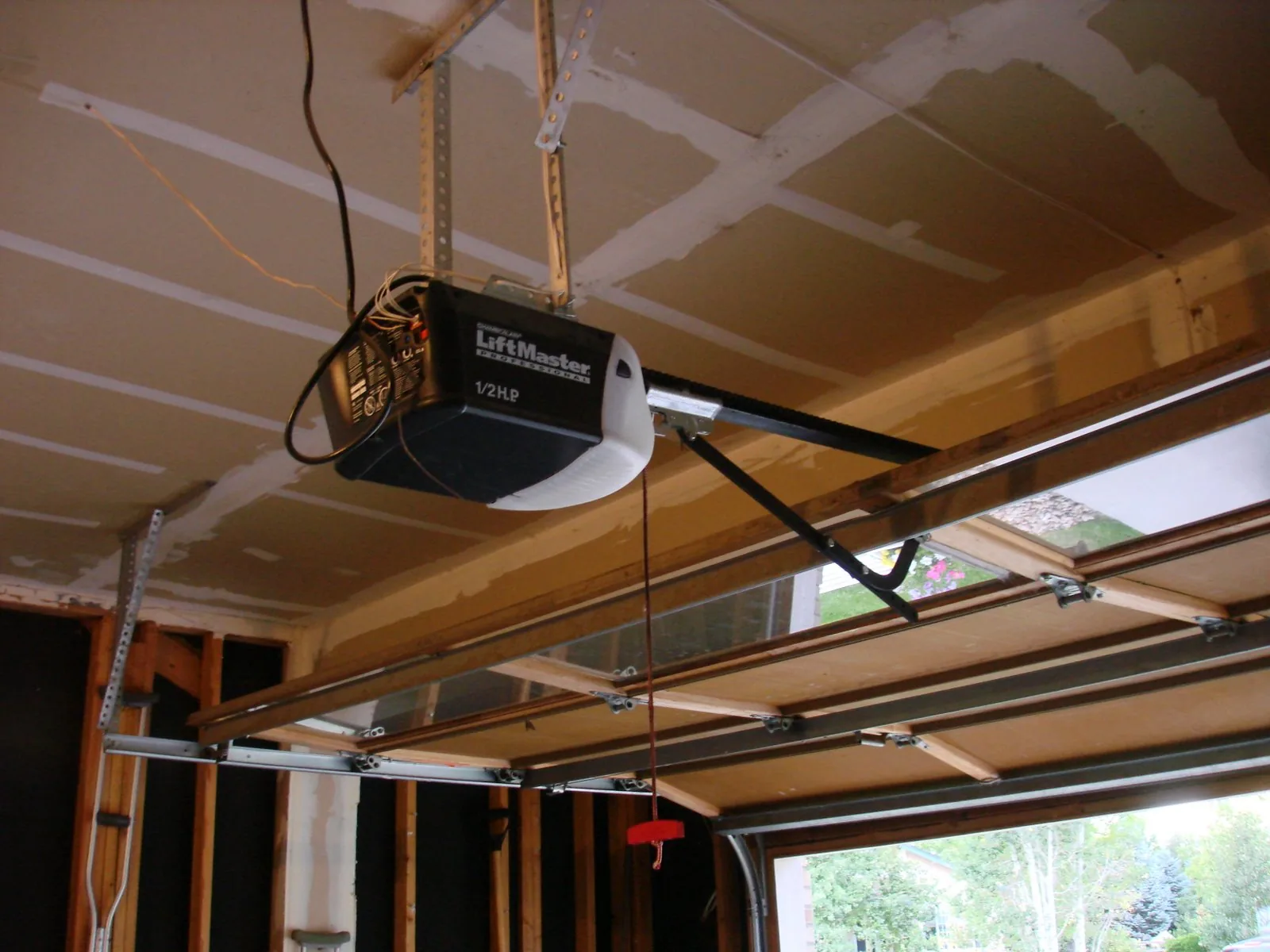
4. An Aging Opener (Chain-Drive Especially)
Chain-drive openers were everywhere for decades and they are inherently noisier than belt drives. An older chain-drive that has loosened up over the years can sound like a small jackhammer on every cycle. The honest, biggest single noise reduction in many homes is replacing the chain drive with a belt drive opener — and you get smartphone access, keyless entry, and battery backup along with it.
- Symptom: chain slap, motor whine, vibration through the ceiling
- Homeowner fix: tighten the chain to spec (the manual shows the right deflection)
- Real fix: upgrade to a belt-drive opener — dramatic noise drop, modern features

5. A Door That Has Lost Its Balance
A door that is out of balance forces the opener to do work it was not designed to do — and the opener complains audibly. Strain on the opener motor is a stretching whine; an unbalanced door may also bang as it changes direction. If your monthly balance test (release the door, lift to waist height, let go — see our safety guide) shows the door slamming or shooting, call us before the spring fails for real.
- Symptom: opener whining, door changing direction with a clunk
- Tech's job: re-tension springs, re-balance the door at half-open

6. Bent Tracks or a Damaged Roller
A bumped or impacted track can develop a slight bend that the rollers fight on every cycle. A single broken or shattered roller becomes a noisy grind on one specific section of travel. Both are pretty obvious to a tech once they put eyes on the door — and both are easy to ignore until they cause the door to jump the track.
- Symptom: noise that happens only at a specific point in the door's travel
- Tech's job: track straightening or replacement, individual roller swap, full inspection
Related Services
You Might Also Need
FAQ
Noisy Door — Quick Answers
Is it OK to oil the tracks?
No. The tracks are supposed to be DRY. Lube on the tracks attracts grit and gums up the rollers. Lubricate the roller bearings, hinges, and spring coils — not the tracks themselves.
My door is suddenly much louder than yesterday — what happened?
Sudden noise change usually means something broke or shifted: a roller shattered, a hinge bolt fell out, a spring lost a coil, or the door slipped on the track. Don't keep operating it — have a tech look at it before what is loud becomes what is stuck.
Will lube quiet my door permanently?
It'll help noticeably for a few months, but lube does not fix worn parts. If you have to re-lube to get the noise back down, the underlying part (often rollers or hinge bushings) is telling you it needs replacement, not maintenance.
Online Booking
Book Your Garage Door Service Online
Pick a time that works for you — residential or commercial. Prefer to talk it through? Call or text (913) 662-3939 for same-day and emergency service.