
Residential · Cables & Locks
Garage Door Cable & Lock Repair in Kansas City
When a lift cable frays or jumps off the drum, the door hangs crooked, drags, or drops on one side — and it's working under the same tension as your springs. We replace cables, drums, manual locks, handles, and lock bars safely, and re-balance the door so it tracks straight again.
The two steel cables on a garage door are easy to overlook until one lets go. They run from the bottom corners of the door up to drums on the spring shaft, and they translate the spring's stored energy into the smooth, even lift you see every day. When a cable frays, slips off its drum, or snaps, that even lift disappears: one side keeps rising while the other stalls, the door wedges in the tracks at an angle, and the whole system can come down fast.
KC Garage Door Repair replaces cables and the hardware around them across the Kansas City metro. We also handle the parts most homeowners actually touch — the manual lock, the T-handle, the slide-bolt lock bars on older or detached-garage doors — so the door not only moves correctly but latches and secures the way it should.
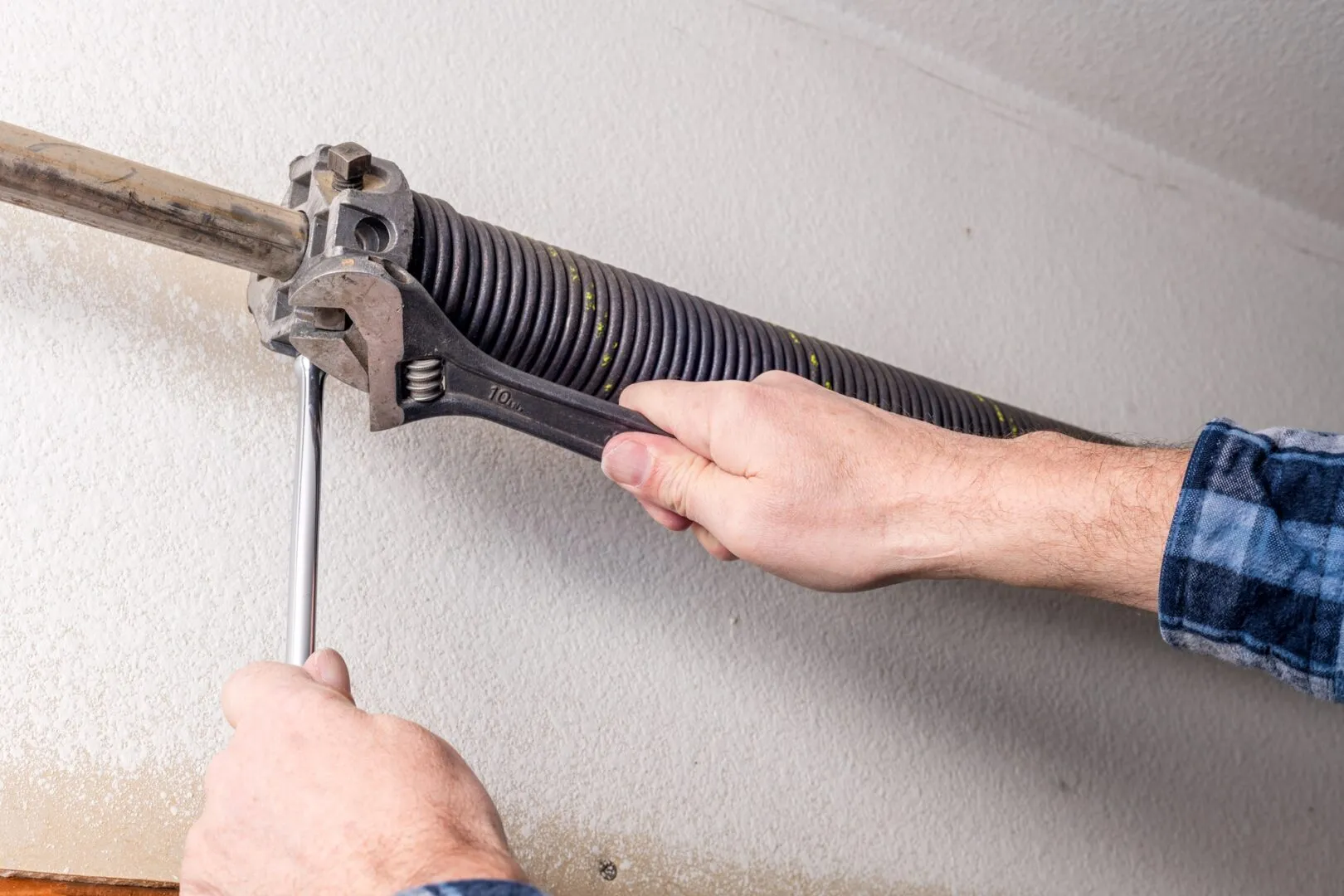
Cables, Drums and Springs Work as One System
A garage door cable is not a standalone part — it's wound onto a grooved drum and held under tension by the springs above the door. That's exactly why a snapped cable is dangerous: it isn't a loose rope, it's a steel line that was carrying part of a 130-to-350-pound door, and when it releases, the load shifts instantly to the other cable and the springs.
Because the cable, drum, and spring share the same shaft, a cable problem is rarely just a cable problem. A cable that jumped its drum often means the drum set screws loosened or the door came out of balance; a frayed cable usually points to a worn drum groove, a rusted bottom bracket, or a door that's been dragging. We trace the cause so the new cable doesn't fail the same way in a month.
- Lift cables run from the bottom brackets up to the cable drums on the spring shaft
- Drums must be matched to the door's height and weight to wind evenly
- A loose drum set screw lets one cable unspool and the door rack sideways
- Frayed strands are a warning sign — the cable is on its way to a full break

Why Cables Fray and Snap
Cables don't usually fail at random. They wear from the bottom up, where they're closest to moisture, salt, and grit. In the Kansas City metro, the freeze-thaw winters and road salt that get tracked into the garage are hard on the lowest few inches of cable and the bottom brackets they're anchored to.
Most of what we see comes down to a handful of repeat offenders, and several of them are made worse by leaving a broken spring or off-track door 'working' for a few extra weeks.
- Rust and corrosion at the bottom bracket where water and salt collect
- A broken or weak spring that throws extra load onto the cables
- A worn or rough drum groove that chews the cable as it winds
- The door coming off-track, so a cable goes slack and then jumps the drum
- Old, undersized, or 'close enough' replacement cables from a prior quick fix
- Bottom brackets that were bent or knocked loose by a bump or a backing-in mishap

Please Don't DIY a Cable — It Shares the Spring's Tension
Swapping a cable looks simple in a video, but the bottom bracket the cable hooks to is under live spring tension, and the springs above have to be safely managed before that cable comes off. People reach in to pop a cable back on the drum, the door shifts, and a hand or finger ends up where the load is. It's the same family of injury that springs cause, for the same reason.

Manual Locks, Handles and Lock Bars
Plenty of doors — especially older models, detached garages, and doors without a powered opener — still rely on a manual lock. That's the T-handle on the outside, the lock bars or slide bolts that shoot into the track on each side, and the spring-loaded mechanism that ties them together. When that hardware seizes, bends, or wears out, the door either won't lock at all or jams locked while the springs and opener keep trying to lift it.
We repair and replace this hardware so the door secures cleanly. We also fix a common and frustrating problem: a lock bar that's still engaged when someone hits the opener — that forces a locked door against its own latch and can bend the bar, bow the track, or strain the opener. If you've added an automatic opener to a door that still has manual lock bars, we'll disable or remove them so they can't fight the motor.
- T-handle locks, cylinder locks, and keyed exterior handles
- Side-mounted lock bars and slide bolts that engage the track
- Seized, bent, or sticking lock mechanisms freed up or replaced
- Disabling old manual lock bars on doors that now run on an opener

What Our Cable & Lock Repair Includes
We don't just hang a new cable and leave. A cable failure is the moment to confirm the springs, drums, and brackets are all sound, because a fresh cable on a worn drum or an out-of-balance door is a short-lived fix.
- Replace both lift cables (we recommend doing the pair, not just the failed side)
- Inspect and re-seat or replace cable drums and tighten the set screws
- Check the bottom brackets and the springs for related wear or damage
- Repair or replace manual locks, handles, and lock bars as needed
- Re-balance the door so it tracks straight and holds at the halfway point
Warning Signs
Signs of a Cable or Lock Problem
- The door rises crooked — one corner climbs while the other lags
- A cable is hanging loose, dangling, or visibly frayed and stranded
- The door is stuck at an angle and wedged in the tracks
- You hear or see the cable unwound off its drum on the spring shaft
- The manual lock won't turn, the T-handle is loose, or the door won't latch
- The opener strains against a lock bar that's still engaged
Our Process
How We Handle a Cable or Lock Repair
Call or Book
Tell us what the door is doing — crooked, stuck, or won't lock. Call/text (913) 662-3939 or book online.
We Inspect
A technician checks both cables, the drums, brackets, springs, and the lock hardware to find the real cause.
We Replace
We safely manage the spring tension and install correct-spec cables, drums, or lock parts.
Balance & Test
We re-balance the door, confirm it tracks straight, and test that it opens, closes, and locks smoothly.
FAQ
Cable & Lock Repair — Common Questions
Is it safe to use my garage door with a broken cable?
No — stop using it. With one cable gone, the door is unbalanced and the load is dumped onto the remaining cable and the springs. The door can drag, wedge in the tracks, or drop on one side without warning. Leave it where it is and call us; forcing it open or closed usually turns a cable job into a bent-track or off-track job.
Should both cables be replaced or just the broken one?
We almost always replace both. The two cables are the same age and have taken the same wear, so when one frays or snaps the other is usually not far behind. Replacing the pair keeps the door balanced and saves you a second trip out for the matching cable a few weeks later.
Can you fix a garage door lock that's stuck or won't latch?
Yes. We repair and replace manual locks, T-handles, keyed exterior handles, and the side lock bars that slide into the track. If a lock bar is jamming against the opener, we'll free it up and either repair the mechanism or disable the bars on a door that now runs on a motor so they stop fighting each other.
Why does my door keep coming off-track or wearing out cables?
Usually it's a chain reaction. A weak spring, a loose drum, rust at the bottom bracket, or a dragging door lets a cable go slack, the cable jumps the drum, and then the door racks off-track. Replacing only the cable without fixing the cause just resets the clock. We trace it back to the source so the repair actually holds.
Do you carry cables and lock parts on the truck?
We stock common lift cables, drums, and lock hardware so most cable and lock repairs are handled the same day we come out. If your door needs a less common drum size or a specialty lock, we'll tell you up front before any work begins.
Online Booking
Book Your Garage Door Service Online
Pick a time that works for you — residential or commercial. Prefer to talk it through? Call or text (913) 662-3939 for same-day and emergency service.