
Residential · Tune-Up & Maintenance
Garage Door Tune-Up & Maintenance in Kansas City
A garage door is the heaviest moving object in most homes, and it runs on parts that quietly wear out. Our multi-point garage door tune-up lubricates the hardware, tightens what's loosened, runs a full balance check, and tests the safety features — then flags the worn parts that turn into a 6 a.m. breakdown. Searching for garage door maintenance near me? We service doors across the Kansas City metro, same-day from our Olathe shop.
Most garage door failures don't come out of nowhere. A roller has been grinding for months, a bolt backed itself out cycle by cycle, the door has slowly drifted out of balance and quietly overworked the opener. By the time it strands a car in the garage, the part that finally let go had been warning you for a while. An annual garage door maintenance visit is how you catch all of that on a calm Tuesday instead of a freezing Monday morning.
KC Garage Door Repair runs a full multi-point garage door inspection on residential doors across the Kansas City metro — Johnson, Wyandotte, Jackson, Clay, Platte, and Cass counties on both sides of the state line. We're based in Olathe, so garage door maintenance Olathe homeowners book is local work for us — and the same crews cover garage door service Johnson County and the wider metro rely on. We go through every moving part of the system — springs, cables, rollers, tracks, hinges, opener, and seals — lubricate and adjust what we should, and give you a straight read on anything that's wearing out before it fails. This garage door servicing is the least dramatic thing we do and one of the most worthwhile.
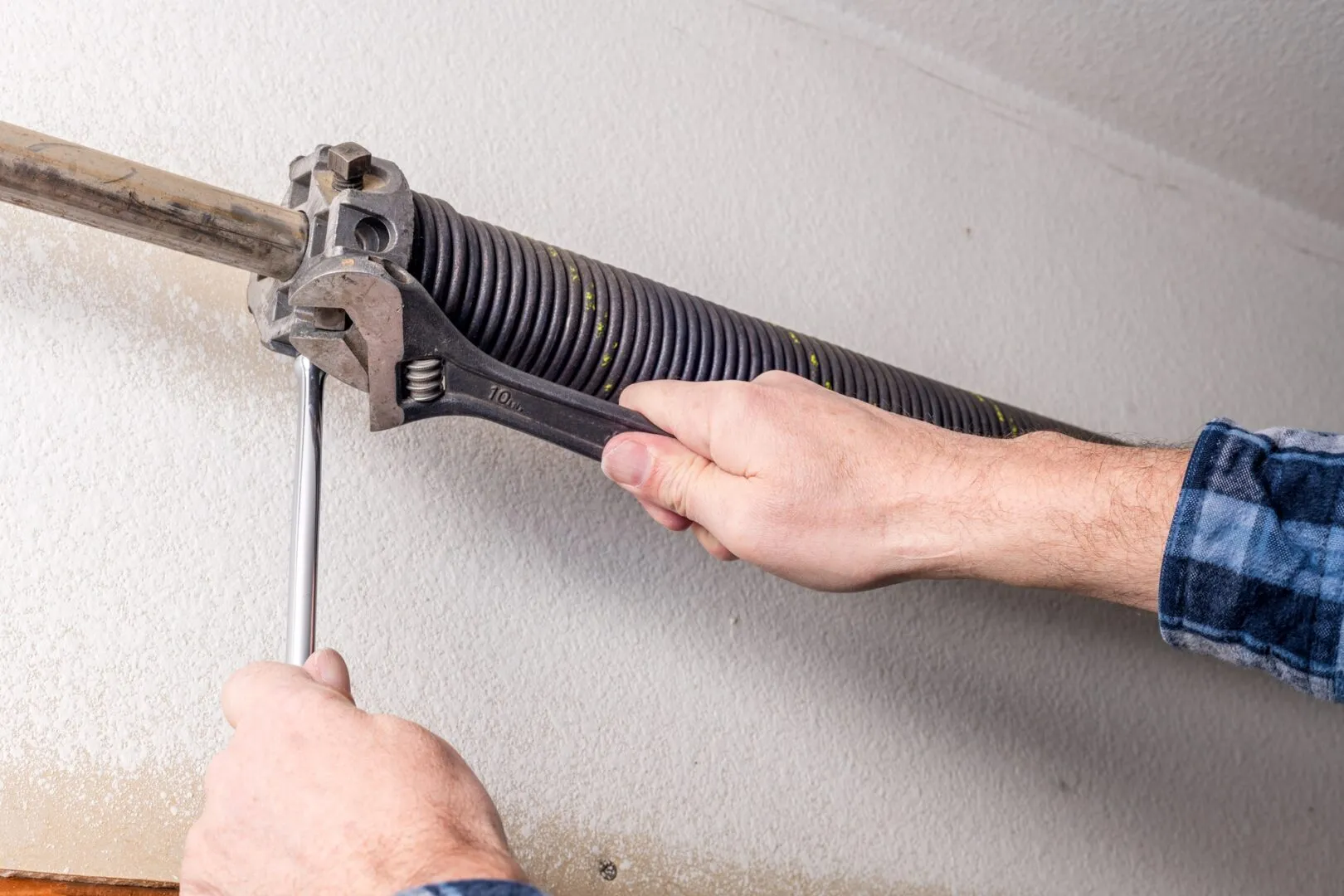
What a Tune-Up Actually Covers
A real garage door tune up is a head-to-toe inspection, not a quick squirt of oil on the squeaky parts. Your door has dozens of moving pieces, and they all wear at different rates. Springs lose tension, rollers wear flat, nuts and bolts vibrate loose, the opener slips out of adjustment, and the weather seals dry out and crack. We work through the whole list so the door moves the way it did when it was new — smooth, quiet, and balanced.
The goal isn't just a door that runs today. It's catching the cable that's starting to fray, the bearing that's gotten noisy, or the spring that's near the end of its life — while there's still time to plan the fix instead of scrambling for an emergency repair.
- Lubricate rollers, hinges, bearings, springs, and the opener rail with the right grease
- Tighten every bracket, bolt, and hinge that vibration has worked loose
- Check the door balance by hand and adjust spring tension as needed
- Inspect cables and springs for fraying, rust, gaps, and wear
- Test the safety sensors and the opener's auto-reverse
- Check weatherseal and bottom seal for cracks, gaps, and daylight
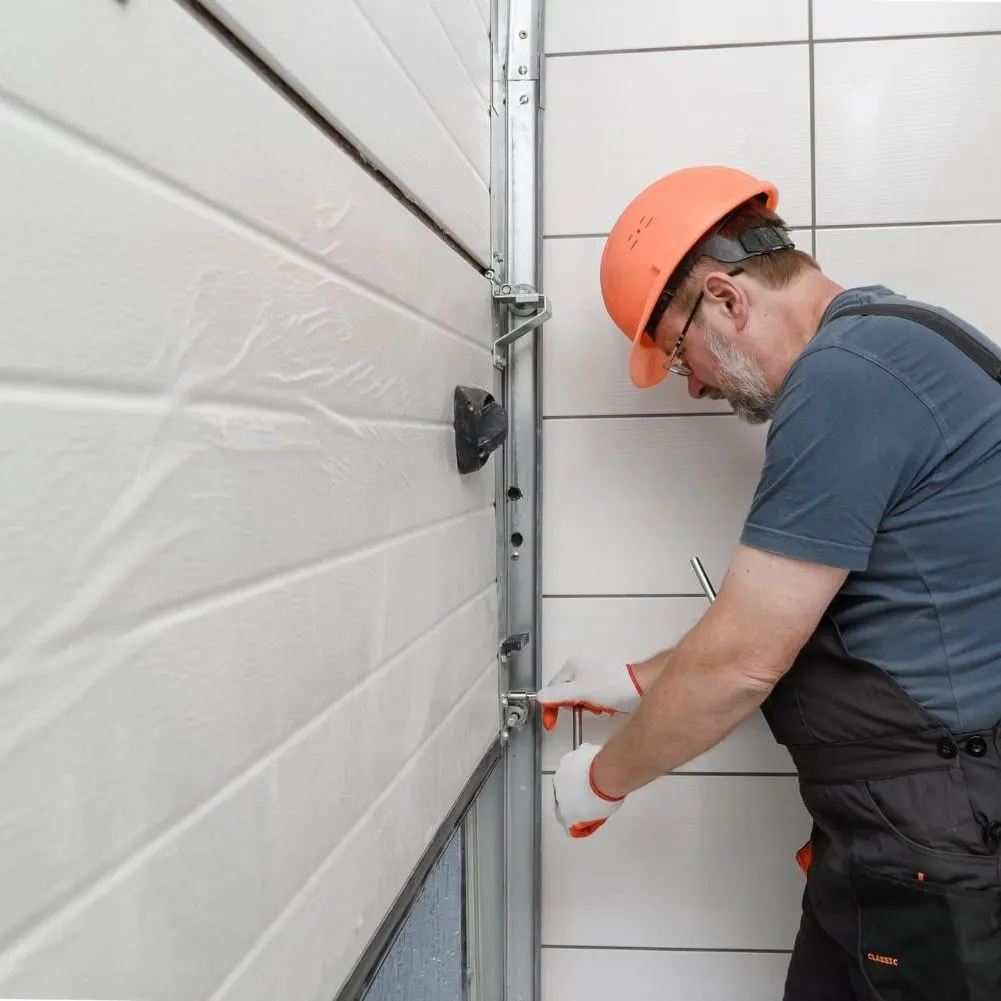
Our Multi-Point Tune-Up Checklist
Every garage door servicing visit follows the same defined checklist, so nothing gets skipped on a busy day. It's a real multi-point garage door inspection — these are the points we actually work through, in order, on a standard residential door.
If your door is in good shape, the visit is short. If we find a worn part along the way, you'll hear about it before we touch it — the checklist is for catching problems early, not creating work that isn't there.
- 1. Lubrication service — rollers, hinges, bearings, springs, and the opener rail get the right grease (a proper garage door lubrication service, not a quick spray)
- 2. Fastener check — every bracket, bolt, and hinge tightened where vibration has loosened it
- 3. Garage door balance check — door tested by hand and spring tension adjusted as needed
- 4. Spring & cable inspection — checked under load for fraying, rust, gaps, and end-of-life wear
- 5. Roller & hinge check — flat-spotted rollers and worn bearings flagged
- 6. Track alignment — tracks checked for level, plumb, and clearance
- 7. Safety-sensor & auto-reverse test — photo-eyes and the opener's reverse verified
- 8. Opener force & travel limits — set so the door reverses on contact and seats fully
- 9. Weatherseal check — bottom seal and perimeter seals inspected for cracks and daylight

Why Annual Maintenance Pays for Itself
A garage door cycles thousands of times a year. Every one of those cycles puts load on the springs, drags the rollers along the track, and stresses the cables and hardware. Skip maintenance and the wear compounds: a little misalignment makes the rollers bind, binding makes the opener strain, a straining opener wears out faster, and a door that's drifted out of balance puts the whole weight of the door on parts never meant to carry it alone.
The math is simple. Annual garage door maintenance is a short, low-cost visit. The failures it prevents — a snapped spring, a burned-out opener, a door off its track — are bigger, more expensive, and almost always happen at the worst possible time. Keeping the door balanced and lubricated also makes it quieter and noticeably easier on the opener motor, which is often the most expensive single part in the system.

Kansas City Weather Is Hard on Garage Doors
Kansas City puts a garage door through a full year of stress. Winter freeze-thaw is the worst of it: cold thickens the grease on the rollers and bearings, and steel torsion springs get more brittle as the temperature drops. A spring that's near the end of its cycle life almost always lets go on the coldest morning of the year, not a mild afternoon — the cold is just the last push.
Summer brings its own problems. Heat and humidity swell wood panels, dry out and crack the weather seals, and speed up corrosion on cables and hardware. Spring and summer storms blow grit and debris into the tracks, where it grinds at the rollers every cycle. A door that runs fine in October can be binding, noisy, or seized by January.
The fix is timing. A fall garage door tune-up — before the first hard freeze — heads off most winter breakdowns by getting fresh lubricant on the moving parts and catching a tired spring before the cold finishes it. A quick check in spring clears out winter grit and resets the door for the warm months. This seasonal angle is why so many Kansas City homeowners search for garage door servicing every autumn.

What Drives the Cost of a Tune-Up (and What's Included)
A standard tune-up is a flat, predictable maintenance service — you're paying for the multi-point garage door inspection, the lubrication, the fastener tightening, the balance check, and the safety tests, all in one visit. We don't publish a fixed price online because no two doors are identical, but a few honest factors are what move it for your specific door.
What changes the number: door type and size (a single steel door is simpler than a heavy wood double), whether your door runs on a single spring or a two-spring system, the opener type, and whether it's a residential or commercial door. Access and overall condition matter too — a door that's been neglected for years takes longer to bring back than one serviced every fall.
The one thing that never changes is how we handle extra work. If the inspection turns up a worn part — a tired spring, flat-spotted rollers, a fraying cable — we quote that repair separately and get your approval before we do anything beyond the standard service. You'll never get a surprise on the invoice. For a straight answer for your door, call or text (913) 662-3939.

Noisy Garage Door? Here's What It Usually Means
A noisy garage door is usually the door asking for maintenance, and the specific sound tells you a lot about what's wrong. Most noise comes down to dry parts, loose hardware, or a door that's drifted out of balance — exactly what a tune-up fixes.
A tune-up resolves most door noise: we lubricate the right parts, tighten what's loose, and re-balance the door. When the racket is coming from worn-out parts rather than dry ones, we'll tell you straight — that's when fresh nylon rollers or spring service is the real fix, not more grease.
- Grinding or scraping — usually dry or worn rollers, or a door starting to ride off-track; often points to roller replacement
- Squealing — dry hinges and springs that need lubrication
- Rattling or clunking — loose hardware and worn bearings working free
- A loud bang followed by a dead, heavy door — a broken spring; see spring repair
- Straining or slamming from the motor — an opener fighting an unbalanced door; see opener repair
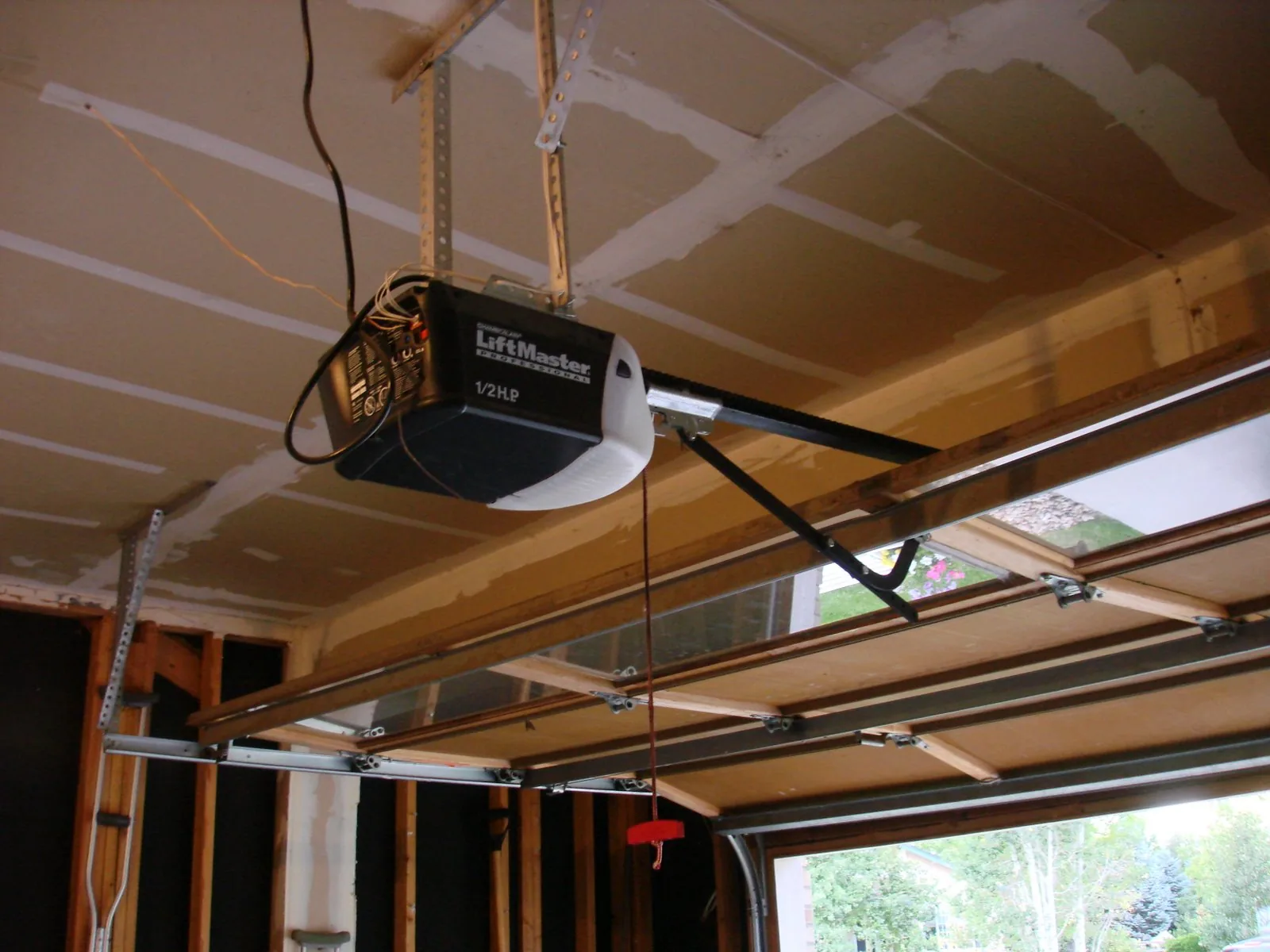
Garage Door Off Track? Stop and Call
A garage door off track is the one symptom where you should stop using the door immediately. It looks like a door that's crooked in the opening, a visible gap between a roller and its track, a door that's jammed partway, or loud grinding as it tries to move. The usual causes are a snapped cable, a broken roller, an impact, debris in the track — or simple neglect that let a worn part finally give way.
Don't force it and don't keep hitting the opener. An off-track door is heavy and under tension, and running the opener against it can turn a track problem into a bent door or a dropped panel. Disconnect the opener with the manual release if the door is partway up, keep kids and cars clear, and call us.
Regular garage door maintenance is the best prevention here — most off-track failures start as a fraying cable or a worn roller that a tune-up would have caught months earlier. If your door is already off the track, we offer same-day garage door service and 24/7 emergency response across the metro. See our off-track repair service, or for an after-hours emergency, our emergency repair line.

How Often Should You Service a Garage Door?
Once a year is the standard for a typical home, and it's the interval most opener manufacturers and the International Door Association recommend. An annual garage door maintenance visit keeps the door balanced and lubricated, resets the safety systems, and catches wear before it becomes a breakdown.
Service more often if your door earns it. Doors that cycle many times a day — multiple drivers, a busy household, multi-family or commercial use — should be checked about every six months. So should doors in dusty, salty, or hard-weather conditions. And service sooner any time a new symptom shows up: fresh noise, a door that feels heavy, or an opener that's started to strain.
For Kansas City specifically, the smartest timing is a tune-up in the fall, before the first hard freeze, with a quick check in spring after winter has had its way with the hardware.

What You Can Safely Do Between Tune-Ups
A homeowner can safely handle a few maintenance basics between professional visits, and they genuinely help the door last longer. None of these involve the parts that store dangerous energy — those stay with us.
Keep it to the safe list below. Spring tension, cable work, and balance adjustment all involve parts under heavy load and belong to trained hands with the right winding tools — see the safety note further down.
- Look the door over monthly — eyeball the springs, cables, and rollers for obvious fraying, gaps, or rust
- Run the photo-eye test — wave an object through the beam as the door closes; it should reverse
- Run the auto-reverse test — lay a board flat under the door; it should reverse on contact
- Listen during a cycle — new grinding, squealing, or clunking means it's time to call
- Apply light silicone-based lube to hinges and rollers (never on the photo-eyes or the track itself)
- Keep the tracks clear of leaves, gravel, and debris

The Two Safety Checks We Never Skip
Two parts of your door exist purely to keep people and pets from getting hurt, and both can drift out of spec without any obvious sign. The photo-eye sensors near the floor should stop and reverse the door the instant something crosses the beam. The opener's auto-reverse should send the door back up if it meets resistance on the way down. We test both on every tune-up, realign the sensors if they've been bumped, and adjust the opener's force settings so the door reverses when it should — not after it's already pressed down on something.

Tune-Ups for Commercial & High-Cycle Doors
We service commercial overhead doors across the Kansas City metro, not just residential. Commercial garage door maintenance follows the same multi-point logic, but the timing is different: a business door that opens and closes dozens or hundreds of times a day wears far faster than a home door, so it should be serviced about every six months rather than once a year.
For a business, a down door is lost time — a blocked loading bay, a security gap, or a stalled shop. Scheduled maintenance keeps the door balanced, the opener healthy, and the safety systems in spec so you're not calling for an emergency in the middle of a shift. For businesses that can't afford downtime, we also offer same-day garage door service and 24/7 emergency response. Larger facilities can plan ahead with our commercial garage door service.

Pairs Well With a Bigger Plan
If a tune-up turns up a part that's near the end — a spring close to its cycle limit, rollers worn down to the stems, cables starting to fray — we'll tell you plainly and let you decide whether to handle it now or schedule it. There's no upsell pressure and no fixing things that aren't broken. A tune-up's whole job is to give you an honest picture of your door so you're never caught off guard.
Many homeowners book a tune-up with a fresh set of nylon rollers, since quiet rollers transform how the door sounds and feels. Whatever the door needs, you'll hear it from us before any work beyond the standard service begins.

Stronghold Coverage - Where We Run Tune-Ups Most
Overland Park and Leawood are the cities where we run the most preventative-maintenance visits - the stronghold core of our service area, with the housing profile that benefits most from annual tune-ups (premium doors, owner-occupied, regular daily use). Each city has a dedicated tune-up page:
- Garage Door Tune-Up in Overland Park, KS - the same 45-minute checklist, no upsells you don't need, from your local Olathe shop.
- Garage Door Tune-Up in Leawood, KS - the same 45-minute checklist, no upsells you don't need, from your local Olathe shop.
Warning Signs
Signs It's Time for a Tune-Up
- The door has gotten loud — grinding, squealing, or rattling as it moves
- It jerks, hesitates, or shudders instead of gliding smoothly
- It feels heavy by hand or won't hold its position halfway open
- You see daylight or feel a draft around the closed door
- The opener strains, runs slow, or the door reverses on its own
- It's been over a year since the door was last serviced
Our Process
How Our Tune-Up Works
Book a Visit
Tell us your door type and what you're noticing. Call/text (913) 662-3939 or book online — same-day garage door service is often available across the metro.
Full Inspection
A technician works through every part: springs, cables, rollers, tracks, hinges, opener, and seals, running a balance check and testing the safety features.
Service & Adjust
We lubricate, tighten loose hardware, fine-tune the balance, realign sensors, and set the opener's force and auto-reverse.
Honest Report
You get a clear rundown of the door's condition and any parts wearing out — so you can plan ahead instead of getting surprised.
Related Services
You Might Also Need
Garage Door Spring Repair
Broken torsion & extension springs, replaced safely.
Learn moreRoller & Track Repair
Worn rollers and bent tracks for quiet, smooth travel.
Learn moreGarage Door Opener Repair & Install
Smart, keyless, battery-backup & quiet belt drives.
Learn moreOff-Track Door Repair
Doors jumped the track, realigned and re-secured.
Learn moreFAQ
Tune-Up & Maintenance — Common Questions
How often should I get my garage door tuned up?
Once a year is a good rule for most homes, and it's what most opener manufacturers and the International Door Association recommend. If your door runs many cycles a day, lives in a dusty or salty environment, or you've noticed new noises, service it about every six months. An annual visit keeps the door balanced and lubricated and catches wear before it becomes a breakdown.
How much does a garage door tune-up cost in Kansas City?
A tune-up is a flat, predictable maintenance visit, but we don't publish a fixed price online because no two doors are the same. The main factors are door type and size, whether it's a single- or two-spring system, the opener type, and residential vs. commercial. If the inspection finds a worn part that needs replacing, we always quote that separately and get your approval before doing the work. Call (913) 662-3939 for a straight answer for your door.
When is the best time of year to get a garage door tune-up in Kansas City?
Fall, before the first hard freeze. Cold is when grease stiffens and stressed springs snap, so a fall service heads off most winter breakdowns. A quick check in spring after winter is smart too — it clears out winter grit and resets the door for the warm months. It's honest regional timing, not a hard date.
What's the difference between a tune-up and a repair?
A tune-up is preventative — we inspect, lubricate, tighten, balance, and test the whole system, and flag parts that are wearing. A repair fixes something that's already failed. The point of regular garage door maintenance is to need far fewer repairs, and to schedule the ones you do need instead of reacting to an emergency.
Why is my garage door so loud?
The sound usually points to the cause. Grinding or scraping is typically dry or worn rollers, or a door starting to ride off-track; squealing is dry hinges and springs that need lubrication; rattling is loose hardware; a loud bang followed by a dead, heavy door is a broken spring. A tune-up (lube, tighten, balance) quiets most doors. If rollers or a spring are worn out, we'll point it out so you can decide on the real fix.
What should I do if my garage door comes off its track?
Stop using it right away and don't force it — an off-track door is heavy and under tension and can fall or cause injury. Don't run the opener; use the manual release cord if the door is partway up, and keep kids and cars clear. The cause is usually a broken cable or roller, an impact, or debris. Call us — we offer same-day and 24/7 response across the KC metro and will get it safely back on track. Regular tune-ups help prevent it in the first place.
Will a tune-up make my noisy garage door quieter?
Usually, yes — and noticeably. A lot of garage door noise comes from dry rollers and bearings, loose hardware, and a door that's drifted out of balance. Lubricating the right parts, tightening what's loose, and re-balancing the door takes care of most of it. If the noise is coming from worn-out rollers, we'll point that out so you can decide whether to replace them.
How long does a garage door tune-up take?
A standard residential multi-point visit is short — typically under an hour for a single door in good shape. A double door, a neglected door, or one that needs adjustments along the way takes longer. If the inspection turns up a worn part that needs replacing, that work is quoted and approved first, so the visit can run longer when a repair is added.
Do you service commercial garage doors too?
Yes — we maintain both residential and commercial overhead doors across the KC metro. High-cycle commercial doors should be serviced about twice a year because they wear far faster than a home door. For businesses that can't afford downtime, we also offer same-day garage door service and 24/7 emergency response. Call (913) 662-3939 to set up commercial garage door maintenance.
Can't I just oil it myself?
Light lubrication is something a homeowner can safely do, and it helps. But a real tune-up goes further — checking balance, inspecting cables and springs under load, adjusting spring tension, and testing the safety systems. Those involve parts holding a lot of stored energy and are best left to trained technicians with the right tools.
Online Booking
Book Your Garage Door Service Online
Pick a time that works for you — residential or commercial. Prefer to talk it through? Call or text (913) 662-3939 for same-day and emergency service.