
Guide · KC Garage Door Repair
Garage Door Safety — What to Respect, What to Check
A residential garage door is the biggest, heaviest moving thing in most homes. Most of the time it just works. The handful of parts that genuinely demand respect are the springs and the photo-eye sensors. Here is the honest, plain-English version.
Garage doors are mechanically simple but they store a serious amount of energy. The two things that put real people in the emergency room are springs released the wrong way and a door allowed to close on something it could not detect. Everything else on the door is approachable for a careful homeowner. These two are not.
Most of what we cover below is what a KC homeowner should know without ever opening a tool box: what to watch for, what is normal, what is not, and the one or two checks that take two minutes a month and catch most problems before they become emergencies.
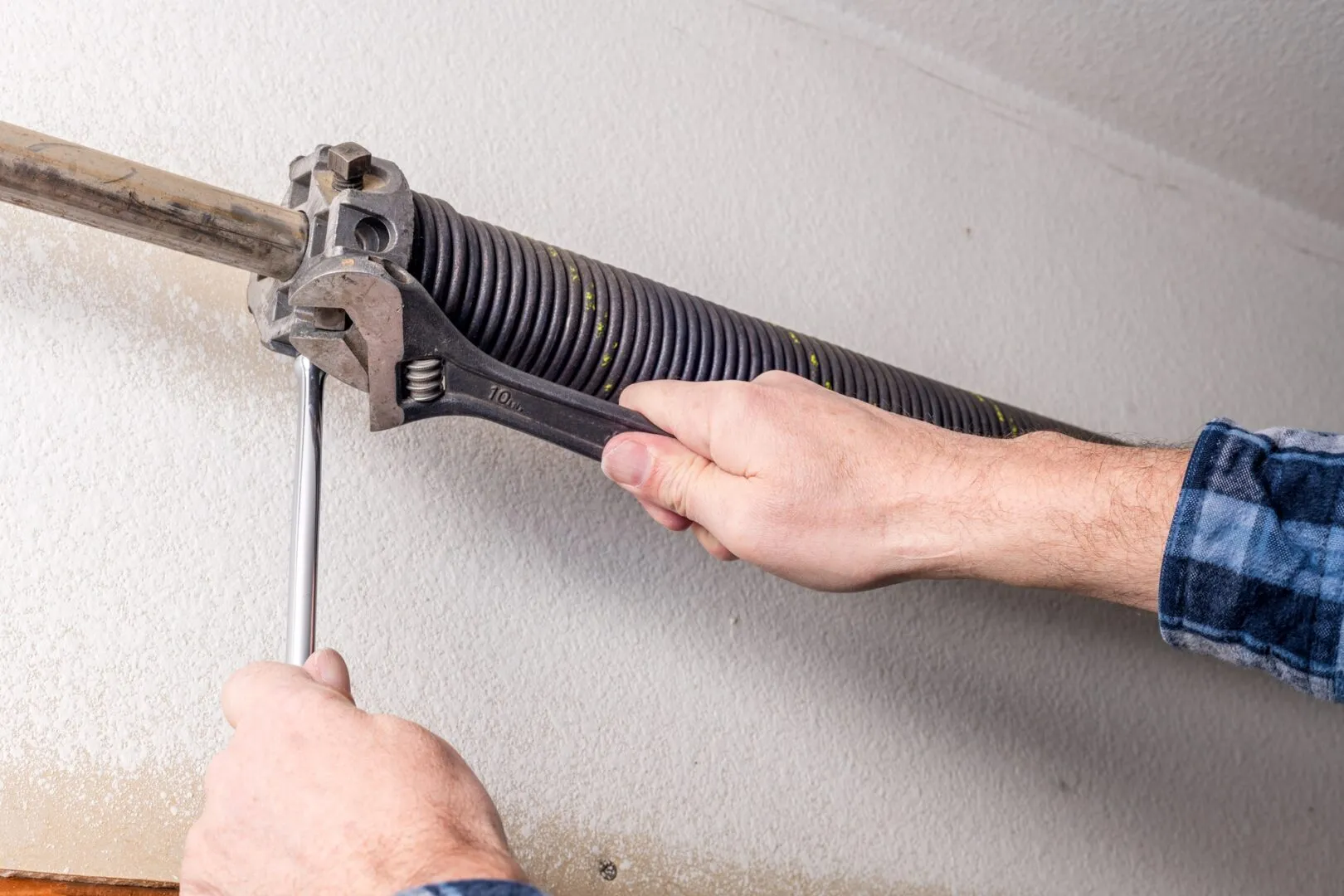
Springs Are the One Thing Not to DIY
Garage door springs counterbalance the entire weight of the door — typically 130 to 350 pounds, sometimes more on larger custom doors. A torsion spring above the door is wound to several hundred pounds of stored tension; an extension spring along each horizontal track is stretched to do the same job. Either system, released the wrong way, releases that energy at the speed of an unpinned grenade. The winding bars, brackets, drums, and cables are all under load at the same time, and a slip during a 'quick' swap is what sends people to the ER.
If you have one spring broken, the other is now carrying double the load it was designed for, it will likely fail soon, and the door is unsafe to operate in the meantime. Leave it closed, call a trained tech. This is genuinely the one repair we ask homeowners not to attempt.
- A door that won't lift, an opener that strains or only raises the door a few inches, or a loud bang from the garage = stop using the door
- Never try to wind or 'adjust' a torsion spring without the correct winding bars and training
- Replace springs in matched pairs, and re-balance the door after every spring change
- An extension-spring setup MUST have a safety cable through each spring — never run extension springs without one
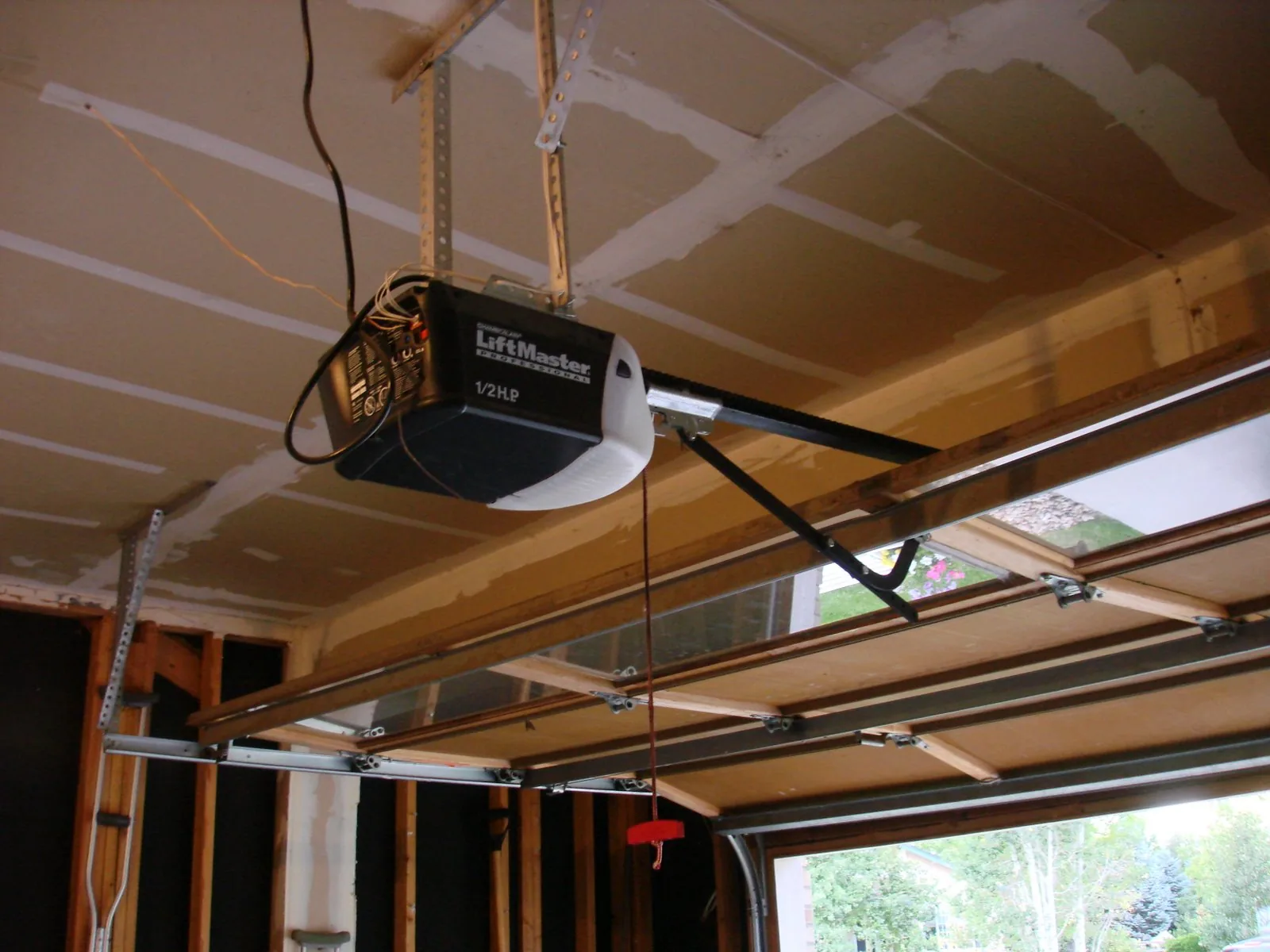
Photo-Eye Sensors — The Other Part That Matters
Every residential garage-door opener built in the U.S. since the early 1990s has had photo-eye safety sensors near the floor on each side of the door. They are the second line of defense: if the beam between them is broken while the door is closing, the door reverses. They exist because of a series of child-injury cases, and they work — when they're aligned and clean.
Sensors that have been bumped out of alignment, fogged over, or have a spider web across them do not reverse the door reliably. Wipe the lenses clean once a month and confirm both lights are solid (not blinking). Once a year, place a 2x4 flat on the floor in the door's path and close the door — it should reverse on contact. If it doesn't, call us — the force or sensor settings need adjustment.
- Both sensors should show a steady, NOT blinking, indicator light
- Wipe the lenses with a soft cloth — no solvents
- If a sensor was bumped, the opener will refuse to close (it will click or beep instead)
- Test the auto-reverse on a 2x4 once a year — it must reverse on contact

Kids, Pets, and a Closing Door
The door is closing all the time, and small humans are unpredictable. The honest, simple rules: wait until the door is completely down before you back out the driveway, never let kids hang from a partly open door, mount the wall button at least five feet up so toddlers can't reach it, and explain to older kids that the door is not a toy. The sensors are a safety net, not a substitute for habit.

The Two-Minute Monthly Check
If you do one thing once a month it should be this: pull the release cord with the door fully closed, lift the door by hand to about waist height, and let go. A balanced door will hold roughly where you put it. A door that slams down or shoots up has lost its balance — usually spring tension that has drifted, or one spring of a pair is on its way out. Reset the opener, and call us before the spring fails for real. Catching it early is the cheap path.
- Once a month: balance test, sensor lens wipe, listen for new noises
- Once a year: full tune-up (we lubricate, tighten, re-balance, test sensors and auto-reverse)
- Any new grinding, screeching, or popping sound: stop and investigate before it strands you
FAQ
Garage Door Safety — Quick Answers
Is it really that dangerous to replace a spring myself?
Yes. A loaded torsion spring stores hundreds of pounds of energy and the winding bars, drums, and cables are all under load at once. A slip can break fingers, hands, or worse. We replace springs every day with the right bars and training, and we re-balance the door after — it costs less than you'd think and it's done right the first time. Please call us before you reach for a YouTube video.
My door reverses by itself for no reason — what's wrong?
Almost always one of two things: the photo-eye sensors are out of alignment or dirty (the opener thinks something is in the path), or the opener's down-force setting is too sensitive (the door is hitting resistance from something mechanical — a worn roller, dry hinge, or a small slope at the bottom of the door). Check the sensor lights first; if both are solid, call us — we'll find the resistance.
Can I disable the photo-eye sensors if they're being annoying?
Please don't. They are the part that prevents the door from closing on a child or pet that ran under it. If they are misbehaving, the fix is alignment, cleaning, or replacement — not bypassing them. We'll diagnose the root cause; it's almost always something simple.
Online Booking
Book Your Garage Door Service Online
Pick a time that works for you — residential or commercial. Prefer to talk it through? Call or text (913) 662-3939 for same-day and emergency service.