
Service Area - Leawood, KS
Garage Door Roller & Track Repair in Leawood, KS
Grinding, screeching, or jerky travel on a Leawood garage door almost always traces back to worn rollers or a track that has drifted out of plumb. We swap tired steel rollers for quiet nylon-on-bearing, straighten and realign the tracks, and get the door gliding again - usually in a single visit.
A door that has been grinding for a year in Leawood is almost never a one-thing problem. A short hop east from our Olathe shop, with premium doors that demand the right parts. The wear pattern is usually some combination of original builder-grade steel rollers that have eaten their own bearings, a horizontal track section that has drifted out of plumb (a lag bolt backing out, an impact from a bumped car, years of vibration), and dry hinges that have started to drag. We address all of it on one visit rather than swapping the loudest part and leaving you to call us back next month for the next loudest one.
Leawood sits in southeast Johnson County, adjacent to Overland Park and Prairie Village. The housing here trends toward larger custom homes with premium garage doors - wider configurations, carriage-style or full-view glass, doors that demand the right parts. From our Olathe shop it is a short, direct run inside the area we cover every day. Leawood is heavy on larger custom homes with wider, heavier doors - 16- to 18-foot widths, carriage-style overlays, and the occasional real-wood door. Heavier doors put more load through every roller and cable, which is why the right wheel diameter, bearing class, and cable gauge actually matter here, not just 'a roller.' On a quiet residential street where a noisy door over the master bedroom is a real quality-of-life problem, the right nylon roller on the right bearing class makes a difference you hear from day one. We will tell you straight whether your door needs a full roller swap, a track realignment, or just a proper service and lube - we are not selling rollers you do not need.
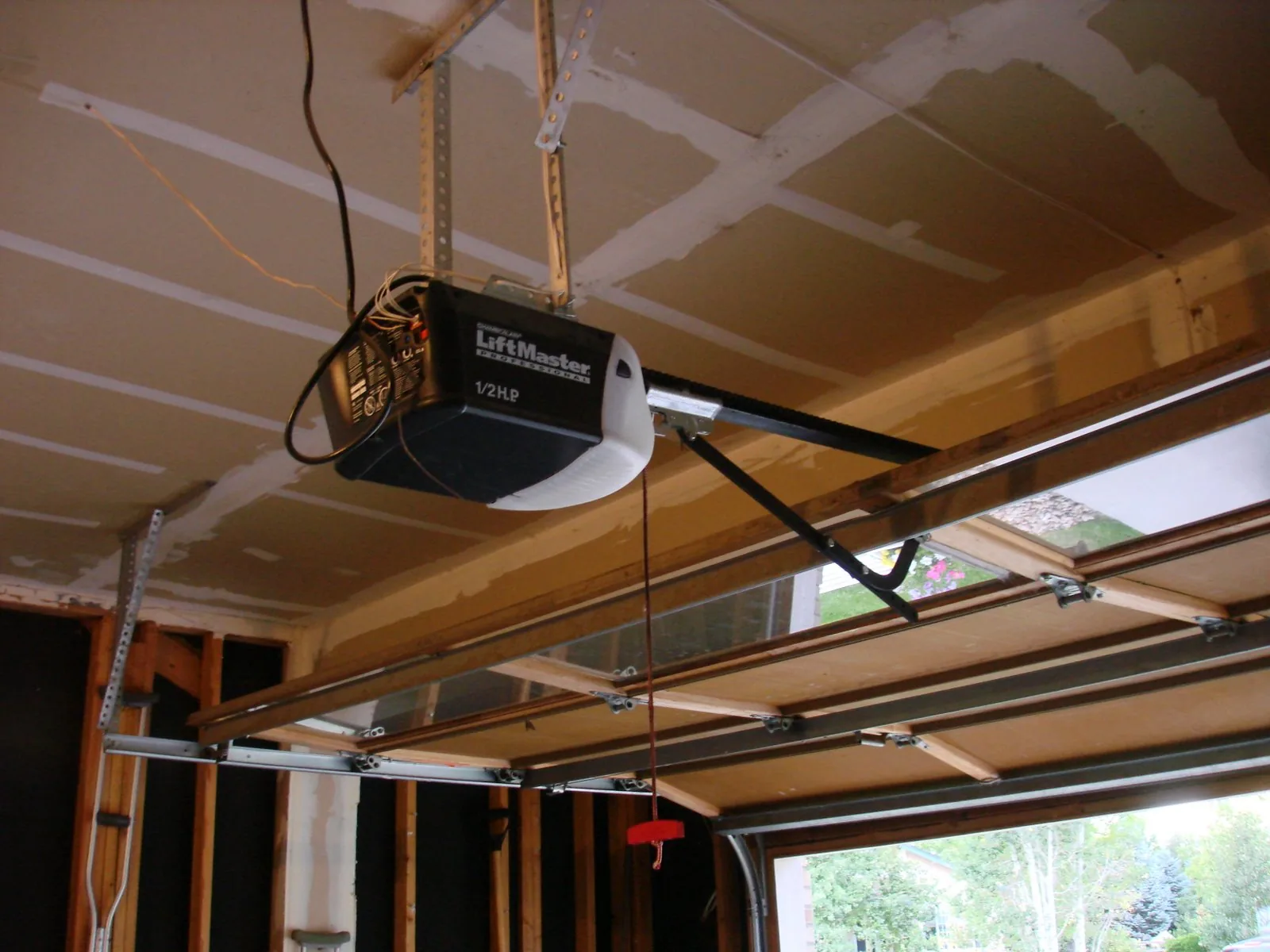
Why Roller Failure Is the #1 Noise Source on Leawood Doors
Most builder-grade doors in Leawood subdivisions left the factory with plain steel rollers - no sealed bearings, no nylon wheel, just a stamped steel stem with a steel wheel turning against a steel track. They are cheap, they are loud, and over 10 to 15 years the metal-on-metal contact wears the wheel and the bearing race until the roller wobbles in the track. That wobble is the rattle and grind you hear, and it puts measurable extra load on every other part of the door - the hinges, the cables, and the opener.
We replace them with nylon wheels on sealed ball bearings. On a typical attached two-car door the difference is immediate and large - most homeowners are surprised a door their size can be that quiet. On a wider, heavier Leawood door we step up to a heavier-duty roller (more steel ball bearings, a stronger stem) sized for the actual door weight, not a 'standard' guess.
- Quiet nylon wheels on sealed ball bearings - the standard upgrade
- Heavier-duty rollers (13-ball, longer stem) for wider/heavier Leawood doors
- Correct stem length and wheel diameter for your specific track
- Old steel rollers removed and recycled, not left rattling on a shelf
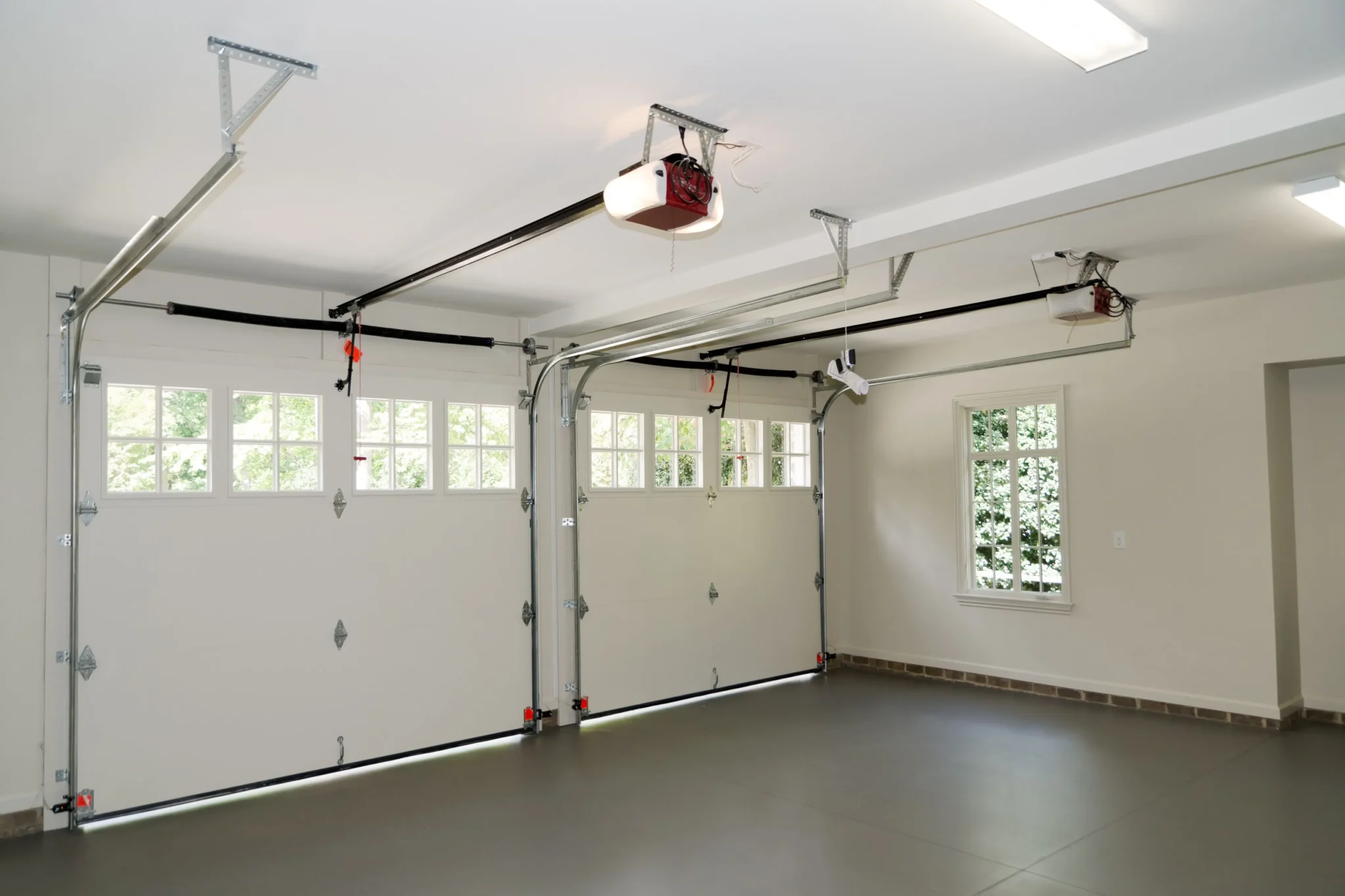
Track Alignment - The Quiet Half of the Job
Rollers can only run as smoothly as the track they ride in. On a Leawood call we check the track from top to bottom: the vertical sections for plumb, the horizontal sections for level and slope, the radius on the curve, the tightness of every lag bolt and hanging strap, and the spacing from the door (too close and the rollers bind; too far and they jump). Where the steel is dented or flat-spotted we straighten it; where it is creased or kinked past saving, we swap that section so the rollers have a clean path again.
Track that has drifted out of plumb is the cause of most 'why does the door sometimes hang up at the same spot?' calls - a high spot, a low spot, or a tight spot that the rollers fight on every cycle. Fixing the track usually fixes the intermittent bind for good, not just until the next time it gets cold.
- Verticals plumbed and shimmed straight (the door rises evenly on both sides)
- Horizontals leveled and sloped correctly (rollers self-feed back to the door)
- Curve radius checked - a bent curve is the #1 cause of 'always hangs at the top'
- Every lag bolt, hanging strap, and bracket re-torqued
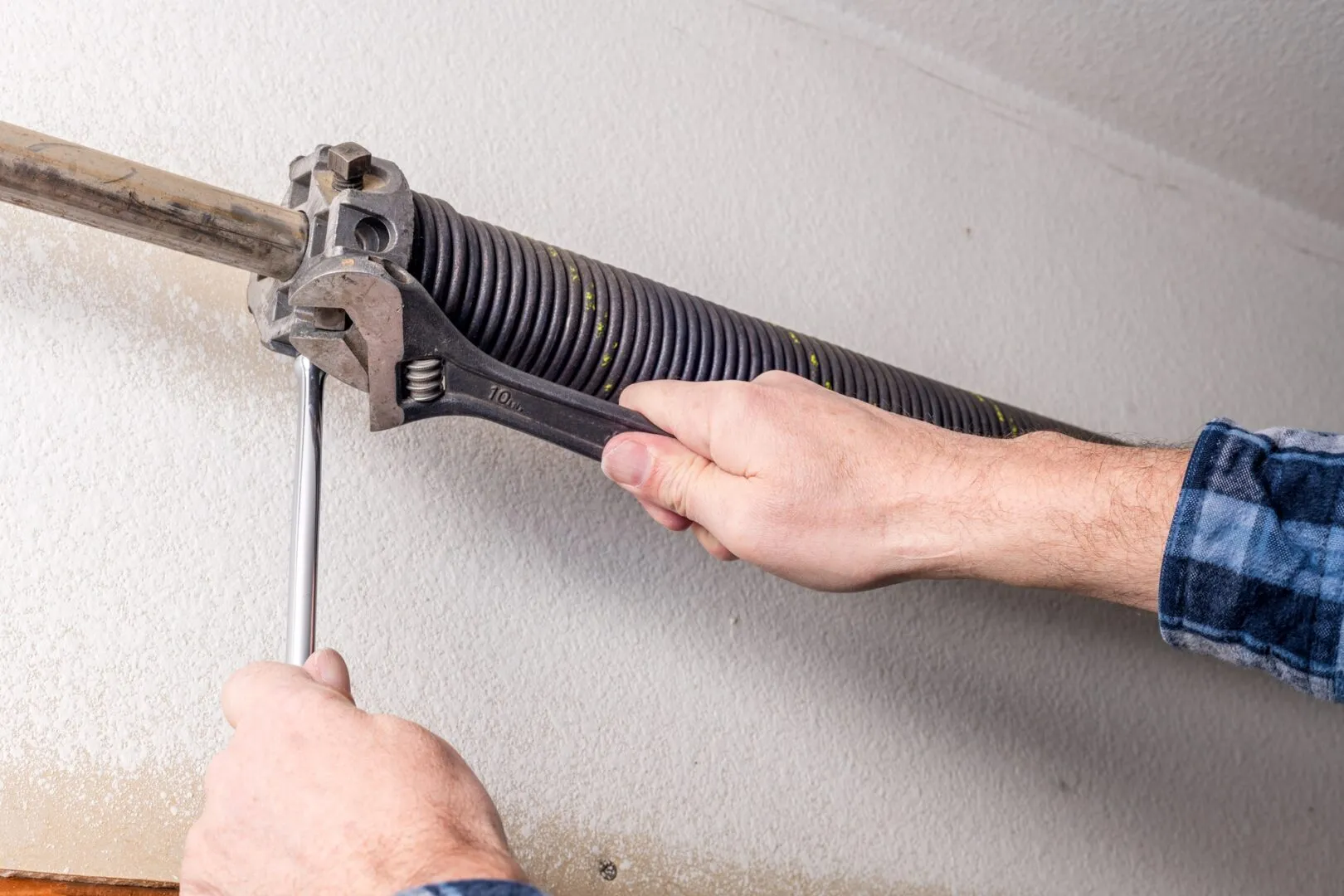
Sometimes It Is Just Dry - the Honest Tune-Up Answer
Not every noisy Leawood door needs parts. Sometimes the rollers, hinges, and bearings are simply bone-dry, and a door that has been screeching for months will quiet right down once everything is cleaned and properly lubricated. We use the right lubricant (a lithium-based or silicone-based garage door product, not WD-40 which is a degreaser and dries out fast) in the right places - rollers, hinges, the bearing plates, the spring coils - and skip the spots that should stay dry, like the track face itself.
If your door is otherwise sound, this can be the whole fix and we will not pretend otherwise. If the rollers are already worn or the track is misaligned, lube buys you quiet for a few weeks but the real cure is the parts that are done. We will tell you honestly which situation you are in before we start swapping anything.

Catching It Now vs. Catching It at the Off-Track Stage
A door that grinds and jerks is wearing itself out faster every cycle. A roller dragging in a bent track forces the opener to pull harder, stresses the hinges and the door sections, and can eventually let a roller pop out of the track entirely. That is when a clean roller-and-track job turns into an off-track call - hours, not minutes; expensive parts, not standard ones; sometimes a panel that got bent on the way down. Catching it at the noisy stage is by far the cheaper, faster job.
FAQ
Leawood Roller & Track - Quick Answers
How long does a roller swap and track realignment take in Leawood?
On a typical two-car residential door in Leawood we are usually done in 60-90 minutes for a full roller swap plus track alignment and lube. Heavier or wider doors and any track sections that need replacing add a little time. We carry common rollers and track hardware on the truck, so most jobs finish the day we come out.
Are nylon rollers really that much quieter than steel on a Leawood door?
Yes - it is one of the most noticeable upgrades you can make. Nylon on sealed bearings does not grind metal-on-metal against the steel track the way builder-grade steel rollers do, so the door runs dramatically quieter and smoother. On a door over a bedroom or against a shared wall in a Leawood townhouse, the difference is the kind you notice the first cycle and keep noticing.
My door only hangs up at one spot - is that the roller or the track?
Almost always the track. A roller that is bad is loud or wobbly all the way through the cycle. A door that hangs up at the same spot every time is fighting a tight or out-of-plumb section of track at that spot. We will check the track at the spot, find the high or low or pinch, and straighten or replace just that section.
Can a bent garage door track be straightened, or does it need replacing?
Depends on how bad it is. Minor dents and flat spots can be straightened cleanly so the rollers run smooth again. If a section is badly creased, kinked, or crushed past saving, we replace that piece rather than leave a spot that will keep catching. We show you what we are seeing on your door before we decide.
Online Booking
Book Your Garage Door Service Online
Pick a time that works for you — residential or commercial. Prefer to talk it through? Call or text (913) 662-3939 for same-day and emergency service.