
Guide · KC Garage Door Repair
Garage Door Maintenance — A Realistic Checklist
Most garage-door 'maintenance' content online is a wall of generic tasks no one will actually do. Here is the short, honest version — what to do monthly, quarterly, and yearly to keep a residential door working without surprises.
A garage door does not need much. It needs a small handful of things done on a real schedule, and it needs to be left alone the rest of the time. The four checks below take less than ten minutes a month total and they catch most failures before they become failures. The annual tune-up handles the rest — and is what we are happiest to do for you.

Monthly (Five Minutes)
The monthly routine is the one habit that prevents the most calls to us. It is a five-minute walk-around with no tools. Anyone in the household can do it.
- Wipe both photo-eye sensor lenses with a soft cloth; confirm both lights are SOLID, not blinking
- Pull the release cord with the door fully closed, lift by hand to waist height, let go — door should hold roughly in place
- Listen for new sounds — a fresh grind, squeak, or clang is the door telling you something
- Visually scan the cables, springs, and rollers — anything frayed, snapped, or shattered = stop and call

Quarterly (Fifteen Minutes)
Once a season, do the longer pass. A small can of garage-door-specific spray lube and a ratcheting wrench is all you need.
- Lube the hinges between sections — one spray each, NOT puddles
- Lube the roller bearings (not the wheel itself, the shaft going into the bearing)
- Lube the spring coils with a thin coat — torsion or extension
- Snug up visible hinge bolts — gently, not over-torqued
- Wipe the tracks DRY with a rag — do NOT add lube to the tracks
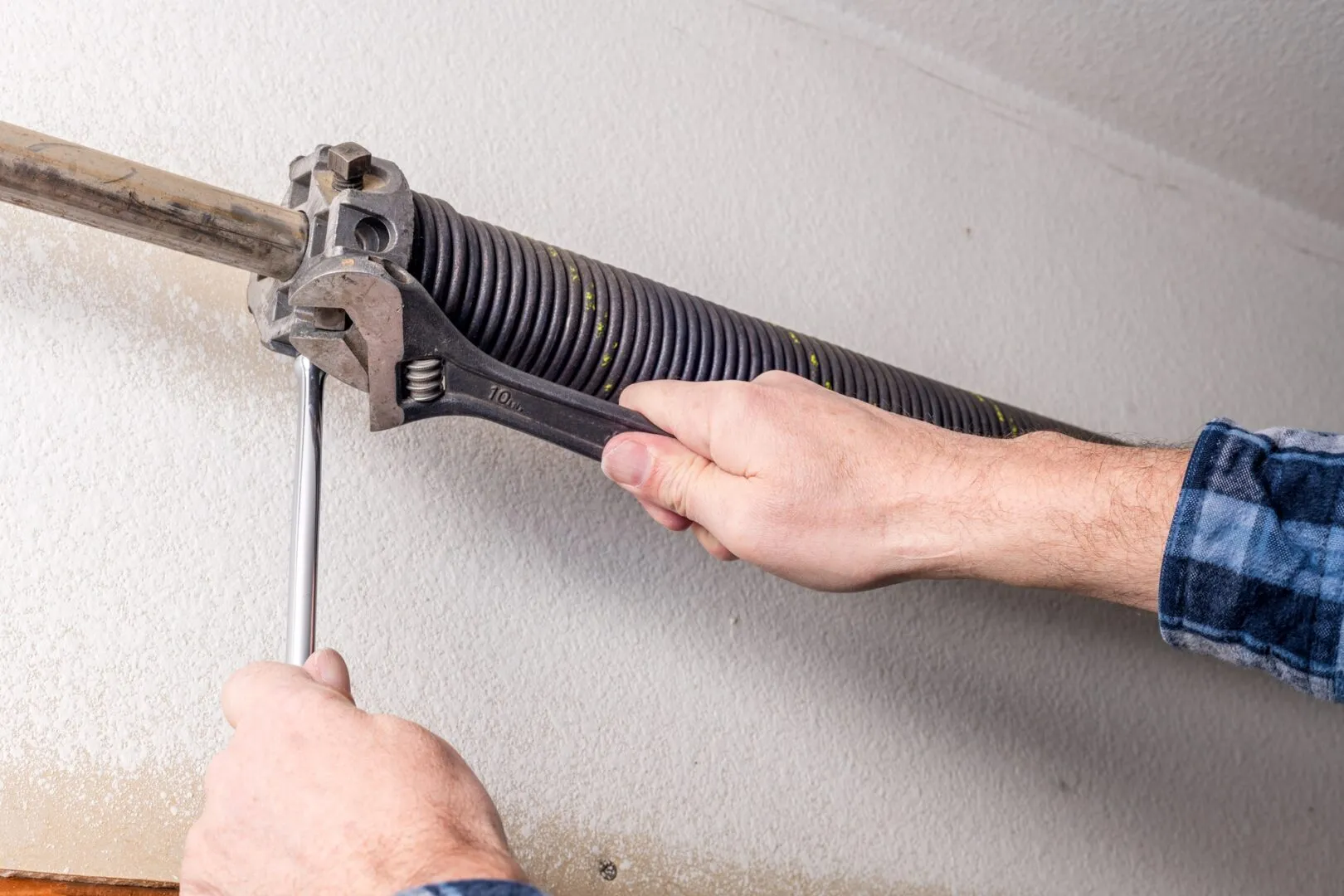
Once a Year — Real Tune-Up
The annual tune-up is the one we honestly think is worth bringing in a tech for. A real tune-up covers a balance check at half-open, hardware torque to spec, sensor alignment and the 2x4 auto-reverse test, opener force adjustment, and an honest assessment of any parts (rollers, hinges, cables, spring) that are showing wear. The point is to catch the failure that is coming six months out, not to clean what is already fine.

Things That Are NOT on the Checklist
These come up a lot in online advice and they are wrong or actively harmful:
- Lubing the tracks (attracts grit, gums up rollers)
- Using WD-40 as a lubricant (it's a solvent — it removes lube, doesn't add it)
- Replacing or adjusting a torsion spring yourself (genuinely dangerous, please don't)
- Disabling the photo-eye sensors because they're annoying
- 'Bumping' a misaligned track back into place with a hammer (a tech with the right tools, please)
FAQ
Maintenance — Quick Answers
How often should I lube my garage door?
Quarterly is plenty for most residential doors. If you live somewhere with extreme heat, cold, or salt air (less of a KC concern), a little more often. Don't over-lube — puddles drip and collect grit. A thin coat is all you need.
What kind of lubricant should I use?
Garage-door-specific spray, usually labeled white lithium or silicone. Avoid WD-40 (it's a solvent) and avoid grease (it collects grit). The brand on the can matters less than the type.
Do I really need an annual professional tune-up?
Honestly, yes — but for the reasons we can do and you shouldn't: spring tension, balance, bottom-bracket torque, opener force. If you faithfully do the monthly + quarterly checklist, the annual is mostly the tech confirming you're in good shape and catching the one or two things wearing out.
Online Booking
Book Your Garage Door Service Online
Pick a time that works for you — residential or commercial. Prefer to talk it through? Call or text (913) 662-3939 for same-day and emergency service.